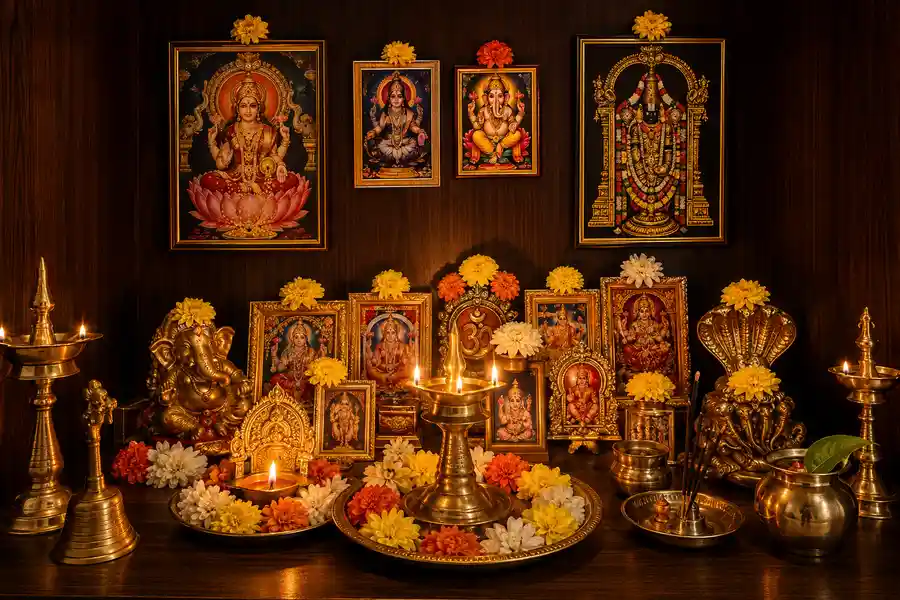
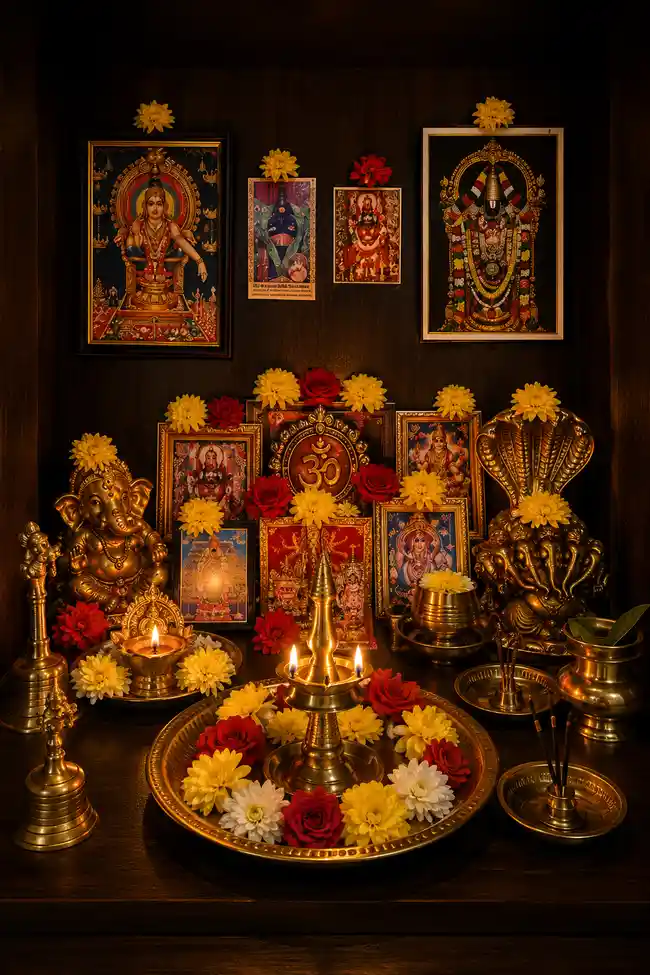



Pooja room Vastu recommends placing the prayer space in the north-east corner of the home, with east and north as practical alternatives for compact apartments. In urban homes, wall-mounted mandirs, niches, and integrated cabinets can help follow Vastu principles without requiring a dedicated room. Light colours, warm lighting, natural materials, ventilation, and clutter-free storage further create a calm and functional pooja space.
The pooja room is an essential part of the house, being the one space that no traditional Indian family will compromise on. However, the challenge is that standard Vastu can be difficult to implement in urban Indian apartments, where layouts are fixed, and rooms are too small for a dedicated prayer space.
Here we look at how traditional Vastu principles can be implemented in urban homes with practical solutions.
Before going into the details, here are the most essential details that homeowners must keep in mind:
Pooja room direction as per Vastu consistently points to the north-east. The ishanya corner is considered the most spiritually charged zone in any home, associated with clarity, divine energy, and incoming positive forces. Morning light enters from the east and north-east in most homes, which makes this corner naturally luminous and conducive to daily prayer.
If the north-east is not available due to a fixed floor plan, east and north are both acceptable alternatives. East connects to the rising sun and new beginnings, while the north is associated with prosperity. These aspects make east and north favourable secondary placements.
Pooja room Vastu strictly discourages south or south-west facing rooms. This is because the south-west is the zone of earth and stability, which does not align with the active spiritual energy needed for a conductive prayer space.
Vastu Shastra tips for pooja room placement vary slightly depending on which direction the house faces. Here is a simple comparison:
| House Face | Recommended Pooja Room Location | Entrance Direction | Worship Orientation |
|---|---|---|---|
| North-facing house Vastu plan with pooja room | North-east or east | From the south or west side | Face east or north |
| West-facing house Vastu plan with pooja room | North-east or north | From the east side | Face east |
| South-facing house Vastu plan with pooja room | North-east | From the north side | Face east or north |
| East-facing house Vastu plan with pooja room | North-east | From the south or west side | Face east or north |
Across all the orientations, the north-east remains the best placement. The entrance to the pooja room and the direction of worship should adjust based on the home’s orientation and layout.
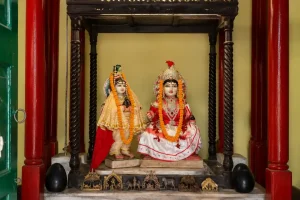
If you’re building a pooja room as per Vastu, the idol should be placed on a platform or shelf at chest height, roughly 2 to 2.5 feet above floor level. Idols placed directly on the floor are considered inauspicious and are also practically inconvenient for daily worship.
The gap between the idol and the wall behind it should be at least a few centimetres. Idols pressed flat against the back wall are considered unfavorable as per pooja room Vastu.
Acceptable idol facing directions:
Avoid placing idols facing north or east directly. You should never face south while praying. Multiple idols in one room are common, but you should ideally avoid duplicating the same deity. Always ensure that the idols are well-maintained and cleaned regularly.
Most Mumbai apartments do not have a dedicated pooja room. A 2BHK in Andheri simply does not have the floor space for a separate room. This is where interior designers in Mumbai use Pooja Room Vastu smartly by implementing some practical solutions:
In all cases, the north-east placement principle holds true regardless of the layout.
Building a small pooja room as per Vastu design guidance recommends keeping the space light, clean, and visually calm.
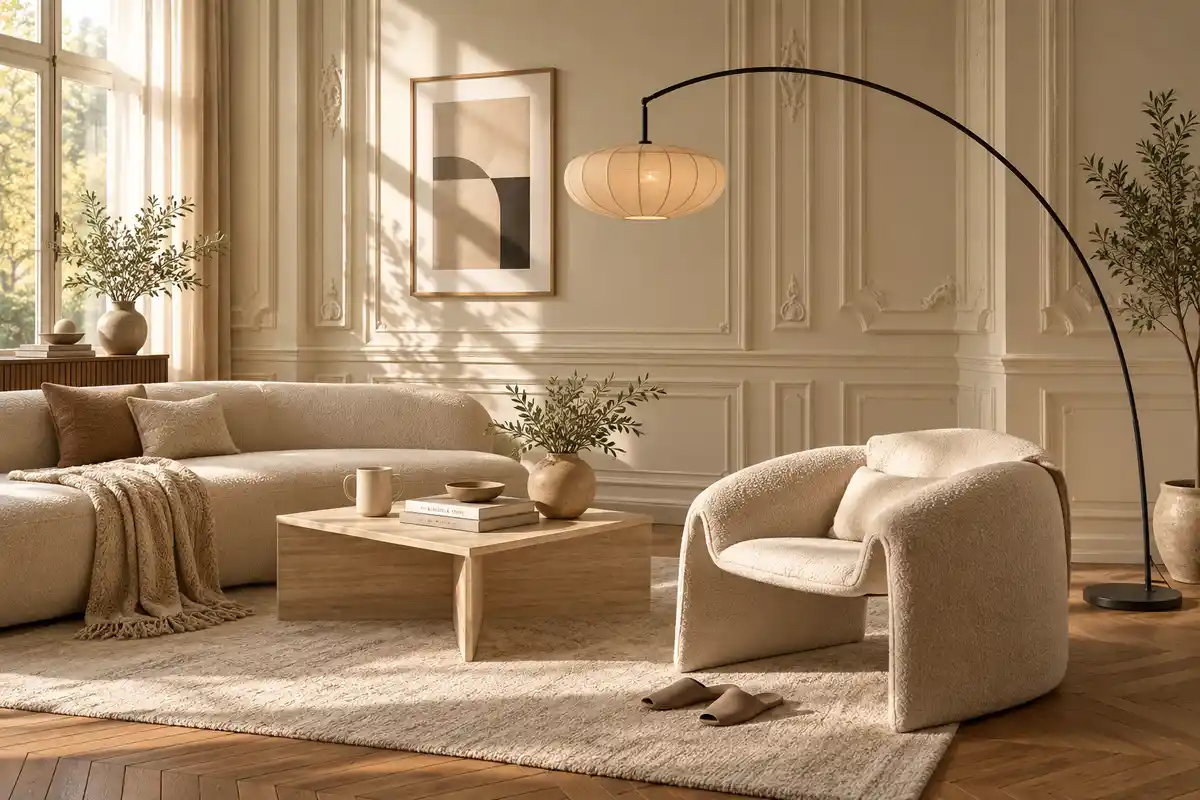
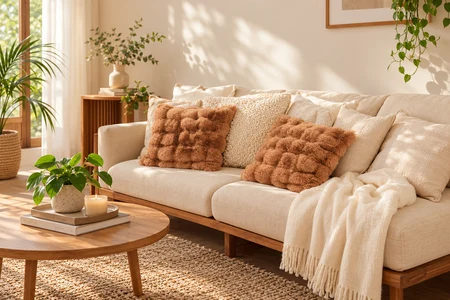
White, cream, pale yellow, and light wood tones are most appropriate. Avoid dark finishes on the mandir unit or the surrounding walls.
Marble, white stone, and teak are traditional and practical. They are easy to clean, durable, and appropriate to the space’s function. Avoid synthetic laminates on the mandir unit wherever the budget allows natural alternatives.
Warm, directed light from a small pendant, a backlit niche, or a diffused wall fitting works well for pooja room Vastu. The space should feel illuminated and welcoming, not lit by a harsh overhead fitting. Avoid cold white LEDs in the prayer space.
The pooja room or corner should not feel enclosed or damp. A nearby window, adequate air circulation from the adjacent room, or a small exhaust for a dedicated room are all worth planning for.
Closed storage for incense, agarbatti stands, diyas, flowers, and pooja essentials keeps the space organised. Visible clutter around the mandir is one of the most common pooja room Vastu concerns and also the easiest to address through built-in storage planning.
These are the most common errors found in Indian homes, particularly in apartments where layout constraints push the pooja space into less-than-ideal positions:
If unavoidable, keep the bathroom door closed at all times and ensure the pooja space is exceptionally well-ventilated and clean.
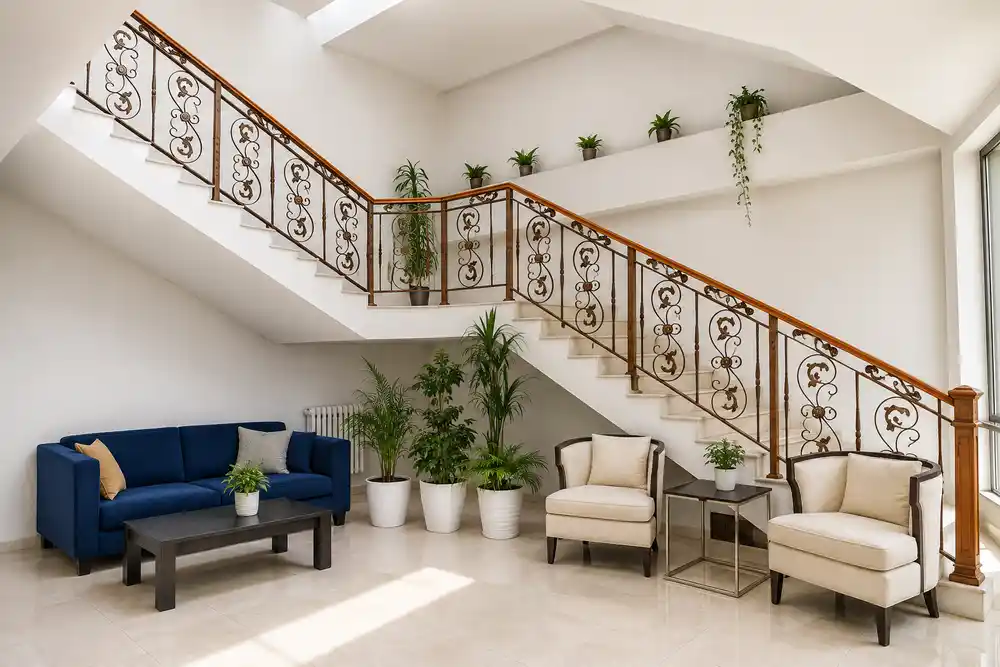
The constant overhead movement in a staircase is considered inauspicious for a prayer space and worth avoiding entirely.
Place them on a platform at chest height. This is both a Vastu requirement and a practical one.
This is one of the most significant pooja room Vastu concerns. If the existing layout places the mandir here, remedy through colours and meticulous maintenance.
Bags, shoes, or household items near the mandir diminish the sanctity of the space. The area immediately around the mandir should be kept clear.
Adding more idols than the family can maintain with daily cleaning and fresh offerings becomes a Vastu concern over time.
Bonito Designs approaches pooja room Vastu as a functional part of the design, not just a decorative afterthought. The process begins with how the family actually performs their rituals:
Pooja room Vastu direction is thus applied within the real constraints of the apartment’s floor plan, finding the best available placement and designing the unit accordingly.
Book a consultation with Bonito Designs today to build a pooja room that you can actually use.
The north-east, or Ishanya corner, is considered the best direction for a pooja room. If this is not possible, the east or north side of the home can be used as suitable alternatives.
According to pooja room Vastu, you should ideally face east or north while praying. Idols can therefore face west or south, respectively.
In small apartments, a wall-mounted mandir, north-east corner unit, recessed niche, or cabinet-style pooja unit in the living or dining room can work well while conserving floor space.
Avoid placing a pooja room next to or against a bathroom wall, under a staircase, in the south-west corner, or inside the master bedroom wherever possible.
Light shades such as white, cream, pale yellow, and natural wood tones are recommended. Marble, white stone, and teak are suitable materials, while warm lighting helps create a peaceful and welcoming prayer space.